What CMS Is Proposing to Change About RTM in 2027
A practical look at the CY 2027 CMS proposed rule affecting RTM: established patients, initiating visits, contractor exclusion, and valuation updates.
CMS has released a CY 2027 proposed rule that would modify how Remote Therapeutic Monitoring services are furnished, valued, and paid for. It’s the most substantive proposed change to RTM since the 2026 update expanded the code set, and it signals where CMS is heading operationally, clinically, and structurally with the RTM program.
One important framing to hold throughout: what follows describes a proposed rule, which will move through a CMS comment period before it becomes final. The specific details will likely change during that period. Two of the concepts the proposed rule introduces, what constitutes an “established patient” in therapy contexts and what qualifies as a “separately reportable initiating visit”, are also expected to be clarified when the final rule publishes, since neither is fully defined for RTM in the proposed language. The direction is worth tracking now, but the exact specifications will come from the final rule and the accompanying clarifications.
This article walks through the four specific proposed changes for CY 2027, the longer-term structural consideration CMS is soliciting comments on, and what all of it means for rehab practices thinking about their RTM programs.
What CMS Is Actually Proposing
Two distinct things are in the proposed rule. The first is a set of four concrete changes CMS is proposing to make in regards to how RTM services are furnished and paid for in CY 2027, though the specific language may shift during the comment period. The second is a longer-term structural consideration where CMS is soliciting comments on bundling RPM and RTM codes and creating new HCPCS G-codes to describe remote monitoring services, which is a broader policy discussion likely to unfold across future rulemaking cycles rather than being finalized in the 2027 rule.
The four proposed changes for CY 2027 are: RTM services would only be furnishable to established patients, practitioners would need to furnish a separately reportable initiating visit at the onset of RPM or RTM services, payment would only be allowed when RTM is performed by clinical staff employed by the practice (not contractors), and updated valuations reflecting potentially reduced device costs. Each of these would reshape parts of how RTM operates today, and the sections below walk through what each proposal would mean in practice, with the caveat that the Medicare RTM requirements shaping how RTM works today will continue to apply until the final rule is published.
Proposed Change 1: RTM Services Only for Established Patients
The proposal: RTM services would only be furnishable to patients who are already established with the practice, not to new patients enrolling in RTM at their first encounter. Practices currently able to enroll a patient in RTM at the initial encounter would need to restructure that workflow so that an initial establishing visit occurs before RTM enrollment begins. The clinical rationale CMS is signaling is that established-patient relationships tend to produce more coherent plans of care, cleaner clinical decisions, and better documentation than RTM programs launched at first encounter, essentially standardizing what stronger RTM programs already do. It’s worth reinforcing that this remains at the proposal stage. Critically, what CMS considers an “established patient” in the context of therapy, as opposed to physician evaluation and management contexts where the term has a defined meaning, is expected to be clarified in the final rule. Practices building operational readiness for this change will need the final ruling’s specific definition before they can fully lock in enrollment workflows. Approaches like how to implement RTM in a physical therapy practice outline the operational patterns that would generally support the direction, though the exact requirements will be defined by CMS.
Proposed Change 2: A Separately Reportable Initiating Visit
The proposal: practitioners reporting RPM or RTM services would need to furnish a separately reportable initiating visit at the onset of RPM or RTM services. In practice, this would mean that the enrollment visit itself becomes a distinct billable event with its own documentation and billing pathway, not blended into a general evaluation. Practices that currently enroll patients in RTM as part of the initial evaluation encounter would need to restructure that workflow toward a defined post-evaluation initiating visit that documents medical necessity, establishes RTM as part of the plan of care, and formally starts the RTM episode. This proposal reinforces the established-patient direction: the two changes together signal CMS’s preference for RTM as a structured clinical program rather than an add-on service layered onto a routine encounter.
As with the other CY 2027 proposals, this remains a proposed rule rather than a finalized requirement. What specifically constitutes a “separately reportable initiating visit” for RTM services is expected to be clarified when the final rule is published. The exact structure, documentation requirements, and billing mechanics for this visit type haven’t been fully defined in the proposed rule, and practices will need the final ruling’s clarification before they can operationalize the specifics. General best practices covered in CPT code 98975 for RTM setup and patient education point toward the enrollment discipline that would generally support the direction, but the initiating visit’s exact requirements will come from CMS.
Proposed Change 3: Clinical Staff Must Be Employed by the Practice
The proposal: payment for RPM or RTM services would only be allowed when the services are performed by clinical staff employed by the practice, not when delivered by contractors. This is likely the most operationally disruptive of the proposed changes because a real market segment currently runs on contractor-delivered RTM models, where practices outsource monitoring, patient communication, or management time to third-party clinical staff. Under this proposal, that delivery model would no longer generate Medicare payment under RTM codes. Practices using contractor-delivered RTM would need to bring RTM delivery in-house or restructure how they contract with third-party providers. The direction CMS is signaling is that RTM being furnished within the practice’s own clinical infrastructure produces cleaner accountability, better care coordination, and clearer documentation than distributed contractor models. This proposal is still subject to the comment period, though the direction is stable enough that practices evaluating vendor and partner relationships should factor it into current decisions. Considerations covered in what to look for in an RTM solutions partner become especially relevant here, practices should be asking whether a partner’s delivery model would still generate payment under the proposed rule.
Proposed Change 4: Updated Valuation Based on Reduced Device Costs
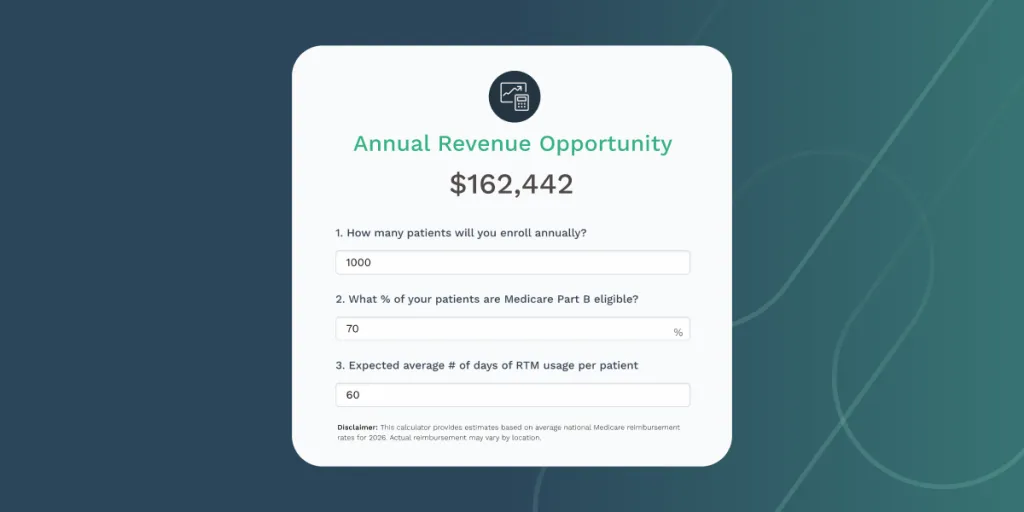
The proposal: CMS is proposing updates to how RPM and RTM services are valued under the Physician Fee Schedule, based on CMS’s understanding that the devices supporting these services may be available at reduced cost compared to CMS’s initial estimates when the codes were first valued. In practice, this could mean that national average reimbursement rates for RTM codes shift downward if CMS concludes that the underlying device costs no longer justify the current valuations. The specific rate changes aren’t yet defined in the proposed rule, the direction is signaled, but the magnitude will depend on the final rule and CMS’s ultimate valuation methodology. This proposal is still subject to the comment period, and the exact impact on the RTM reimbursement math clinics work with today won’t be clear until the final rule is published. Practices building multi-year revenue models around RTM should treat current national averages as subject to potential revision rather than as long-term stable inputs.
The Longer-Term Consideration: Bundling and New G-Codes
Distinct from the four proposed changes above, CMS is also soliciting comments on bundling the RPM and RTM CPT codes and creating four new HCPCS G-codes to describe remote monitoring services. Recent OIG reports have raised recommendations about the remote monitoring code structure that CMS doesn’t believe can be fully resolved with the current CPT coding framework, and the G-code approach would provide a mechanism to address those recommendations. Bundling could mean a shift from the current stacked-code model (setup, device supply, and management time as separate codes) toward a consolidated code structure that packages multiple activities into fewer codes. This consideration is longer-term and structural, not something CMS is proposing to finalize for 2027, but the fact that CMS is soliciting comments signals that structural change to the remote monitoring code family is on the table for future rulemaking cycles. It’s consistent with the broader pattern described in the future of Remote Therapeutic Monitoring in rehabilitation, CMS is not stepping back from RTM, it’s continuing to refine the framework as the program matures.
What This Signals About CMS’s Direction
Taken together, the four proposed changes and the bundling consideration signal a consistent direction from CMS: RTM is being institutionalized, not sunsetted, and the structure around it is being tightened rather than loosened. CMS is proposing to require established patient relationships, formal initiating visits, in-house clinical delivery, and updated valuations, all changes that reward practices running RTM as structured clinical programs rather than as loose add-on services. These proposals are subject to revision during the comment period, and the final rule may materially change what specifically gets required. But the direction is stable, and it reinforces what the 2026 code expansion signaled: CMS is treating RTM as a durable, growing program that merits ongoing regulatory refinement. The operational infrastructure that would produce a strong RTM program under current rules is largely the same infrastructure that would satisfy the proposed CY 2027 requirements. Practices already running RTM the way physical therapy clinics use RTM as structured clinical programs are largely already aligned with the direction, whatever the final specific language turns out to be.
What Rehab Clinics Should Be Doing Now
A few practical things practices can be doing during the comment period and in the run-up to the final rule. Review current enrollment workflows against the direction the “established patient” and “initiating visit” proposals point toward, understanding that the specifics will need refinement once CMS clarifies both concepts in the final rule. Evaluate any contractor-delivered RTM arrangements against the direction of the “clinical staff employed by the practice” proposal. Build operational infrastructure that would satisfy the direction regardless of exact final language. Practices, professional associations, and clinicians who care about the specific final language should also consider submitting comments during the CMS comment period; that’s a legitimate mechanism for shaping what the final rule ultimately says. And the reimbursement math practices work with today should be treated as subject to revision, especially in RTM reimbursement modeling where CY 2027 valuation updates could materially affect the per-patient revenue picture. Building operational readiness in advance is faster than restructuring under an implementation deadline once the final rule is published.
Where Wibbi Fits Into the CY 2027 Direction
The operational patterns CMS is proposing to standardize, in-house clinical workflows, structured enrollment tied to the plan of care, documented initiating activity, and audit-ready records that support clean claim submission, are the patterns Wibbi’s platform is designed around. Practices running Wibbi are largely already aligned with the direction the CY 2027 proposals point toward, because the same operational discipline that produces reliable RTM billing under current rules is what the proposals would require going forward. The specific final requirements will come from CMS, but the underlying orientation, structured programs, clean documentation, in-house delivery, is durable across whatever version of the rule finalizes. That orientation is what RTM programs Wibbi supports are built around rehab settings.
Watching the Final Rule
Everything covered in this article describes proposed rulemaking, not finalized requirements. The comment period may materially change what CMS ultimately publishes as the CY 2027 final rule, and two specific concepts, what constitutes an “established patient” in therapy contexts and what qualifies as a “separately reportable initiating visit” for RTM services, are expected to be clarified in the final ruling. Practices building operational readiness now are working with the direction of the proposal, not with fully specified requirements.
What won’t change regardless of the specific final rule: CMS is committed to RTM as a paid service, the direction is toward more structure and clearer accountability, and practices building operational infrastructure now are positioning themselves for wherever the final rule lands. Pay attention to what the final rule specifies once it publishes, and to the CMS clarifications that come with it, but don’t wait to build the operational discipline that would strengthen an RTM program under any version of the rule CMS could reasonably finalize.